
Investors are increasingly turning optimistic about shares of new-age companies. From broad-based 'sell' calls, analysts are giving thumbs up to Zomato, Paytm, and FSN e-Commerce Ventures-owned Nykaa as these companies have shifted focus to sustainable profits. The shares of Zomato hit a fresh 52-week high of Rs 126 apiece on the BSE on November 7, having rallied 15.4 per cent in one week.

RIL, however, remains miles ahead of TCS in other financial parameters such as total revenue, operating profit, net worth, assets, and market capitalisation.

The Nifty IT Index, the gauge for the performance of information technology (IT) stocks, was the worst performer on the stock exchanges on July 29, a day after Infosys posted lower-than-expected earnings growth for the June quarter and sharply cut its revenue growth guidance for 2023-24 (FY24). The IT index was down 4.1 per cent, its biggest one-day fall in three months. The decline was led by Infosys, with its shares plunging nearly 8 per cent, followed by HCLTech (-3.2 per cent), Wipro (-3.0 per cent), and TCS (-2.7 per cent).

The stock of Divis Laboratories is up 10 per cent over the last couple of trading sessions on expectations that the worst is behind and the company could see a sequential growth in the March quarter of the 2022-23 financial year (Q4FY23). The stock witnessed the highest downgrades among Nifty50 index stocks with earnings cuts over a third after the Q3FY23 results. The company had posted a 32 per cent drop in revenues over the year ago quarter in Q3FY23 and 8 per cent sequentially, which was sharply lower than Street expectations.

'If the majority falls short of expectations, it may prompt initial adjustments in investor sentiment.'

Benchmark stock indices Sensex and Nifty cut short their four-day gaining streak to close lower by half a per cent on Wednesday due to profit-taking in banking oil and metal stocks amid weak trends in global markets.

India's share of total global venture capital (VC) funding fell to 2.9 per cent in calendar year 2023 (CY23) - the lowest since CY19 - reaching $7.3 billion as most startups struggled to raise money without compromising on their earlier valuations. Based on global data by CB Insights on VC funding, funding to Indian startups fell by nearly a third compared to CY22 when it hit $20.6 billion and accounted for 4.8 per cent of the global figure. While the data shows that the world had 71 new unicorns (21 in Asia), India contributed only two of them, as compared with CY22 when it had 22.

InterGlobe Aviation, the operator of India's leading airline IndiGo, delivered a better than expected performance across most parameters in Q2FY24. The company posted its fourth consecutive quarter of net profit of Rs 188 crore. It had reported a loss of Rs 1,583 crore in the same quarter a year ago.

The Nifty IT index, data shows, has outperformed the markets in each of the last four election years post the result. announcement.

On a sequential quarter on quarter basis, the net profit has moved up by 2.6 per cent while the topline grew by 3.5 per cent.

Wipro results follow estimate-beating earnings by larger rivals Tata Consultancy Services Ltd and Infosys Ltd .

The standalone total income of the bank rose to Rs 36,331 crore (Rs 363.31 billion) during the quarter, from Rs 33,959 crore (Rs 339.59 billion) in the corresponding period a year ago, SBI said in a statement.

A weaker-than-expected sales performance, concerns about higher competitive intensity in the current year, and earning cuts by some brokerages have weighed on the stock of the country's largest paint maker, Asian Paints. While the Q3 volume show was slightly below expectations, the company's operational and bottom line beat estimates, benefiting from the falling raw material costs. The stock ended the day with a decline of over 2 per cent at Rs 3,175 apiece.

Logistics services provider Delhivery posted a mixed set of results during the March quarter of the previous financial year (Q4 of FY23). While its operating profit was marginally in the green, its net losses widened as compared to the year-ago quarter. Overall revenues, which were in line with estimates, fell 10 per cent year-on-year (YoY).
India's second-biggest truck and bus maker Ashok Leyland Ltd reported on Friday a 4.7 per cent fall in fourth-quarter earnings despite a 20.8 jump in total income, the Bombay Stock Exchange said.

Its total income was down 4.9 per cent at Rs 14,304.6 crore

Since its October high last year, the stock of innerwear major Page Industries has been on a downtrend, shedding a little over 30 per cent of its market value. Higher competitive intensity, muted volumes, pressure on margins, and rich valuations have led to downgrades for the stock. The October-December quarter (third quarter, or Q3) performance was lower than the Street's expectations - both on volumes/sales and margins.

he 30-share Sensex ended at 20,062 down 49 points or 0.25% and the 50-share Nifty ended at 6,095 down by 20 points or 0.32%.

Total expenses of the company increased by 11.76 per cent at Rs 9,816.3 crore (Rs 98.16 billion) during the reported quarter from Rs 8,782.9 crore (Rs 87.82 billion) in the corresponding period of previous fiscal, the company said in a BSE filing.
The country's top software exporter, Tata Consultancy Services, on Monday reported a 2.1 per cent decline in its net profit at Rs 1,333 crore (Rs 13.33 billion) for the fourth quarter ended March 31, 2009.
ICICI Bank, India's second largest commercial bank, beat market expectations on Friday with a quarterly profit of Rs 3.38 billion, driving its shares up more than one percent.
Bajaj Auto, India's second biggest motorcycle maker, reported on Wednesday higher-than-expected earnings in its fourth quarter, boosted by other income.

Analysts seem to be generally pessimistic about Bharat Heavy Electricals (BHEL). Out of 15 brokerages with recommendations since May this year, two have 'buy' while five have 'sell' and eight have 'underweight'/'reduce'/'underperform'/'hold' recommendations. The average target price of the public sector undertaking (PSU) is Rs 61. However, the stock has been consistently hitting new highs, which indicates that there is some kind of valuation mismatch.

Combined profit before tax of 81 firms down 37.5% y-o-y, worst show in at least 3 years.

The earnings are, however, expected to be down around 2 per cent on a sequential basis due to pent-up demand getting exhausted and the adverse impact of rising metals and energy prices on consumer goods and manufacturing companies.

A strong business update for the April-June quarter of the 2023-24 financial year Q1FY24 has led to a big jump of over 7 per cent in the share price of Bajaj Finance on Tuesday (July 4). The non-banking financial company's (NBFC's) new loan book grew 34 per cent with 9.9 million new loans booked in Q1FY24 from 7.2 million loans booked in Q1FY23. The company's total customer franchise rose to 72.98 million (as on June 30, 2023), compared to 60.30 million year-on-year (YoY) with the highest-ever quarterly increase of 3.84 million in Q1FY24. Assets under management (AUM) grew by 32 per cent to about Rs. 270,050 crore in Q1FY24 from Rs. 204,018 crore in Q1FY23.

P&G Hygiene and Healthcare's June quarter numbers were better than Street estimates, led by strong sales and robust margins. The company, which owns leading consumer brands like Whisper, Vicks and Old Spice, posted a 12.6 per cent year-on-year (Y-o-Y) growth in sales at Rs 852.5 crore during the quarter. The double digit sales growth, led by expansion of its distribution reach, reverses a sluggish sales graph with three of the last four quarters reporting a fall in sales.

India's largest two-wheeler maker by volume - Hero MotoCorp (Hero) - posted a better-than-expected operating performance in the January-March (fourth quarter, or Q4) quarter of 2022-23 (FY23). Riding on higher average selling prices which were up 5 per cent year-on-year (YoY) and volume growth of 7 per cent, the company registered a 12 per cent growth in revenue to Rs 8,306 crore. The company sold 127,000 units in the quarter, largely driven by domestic sales which were up 11.6 per cent, while exports saw a sharp fall of 57 per cent over the year-ago quarter.

The stock of the retail chain Avenue Supermarts (Dmart) was the biggest loser in the BSE 100 Index shedding 4.35 per cent on Thursday and added to these losses on Monday by falling an additional 1.3 per cent. The Street was reacting to lower than expected operational performance by the company in the March quarter. The country's largest listed retailer by market capitalisation reported a 20 per cent year-on-year (y-o-y) growth in its top line to Rs 10,337 crore.

Tata Motors' 2022-23 (FY23) January-March quarter (fourth quarter, or Q4) results were better than Street estimates, with strong showing across Jaguar Land Rover (JLR), as well as commercial and passenger vehicle businesses in the domestic market. The company posted its highest consolidated top line and operating profit, with growth of 35 per cent and 46.5 per cent, respectively, over the year-ago quarter. While the top line was aided by a 49 per cent growth in the JLR unit, all key segments reported margin expansion.

The S&P BSE Sensex shed 42 points to close at 25,838 and the Nifty50 lost 13 points to end at 7,899.
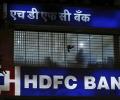
HDFC Bank Q4 review: HDFC Bank's January-March quarter (Q4) results, for financial year 2022-23 (FY23), brought no cheer to investors as elevated costs, and merger-related uncertainties continue to dent the sentiment. Moreover, analysts fear that merger-related costs may put pressure on margins and cost to income ratio in the near-term, while the return on equity could moderate owing to low leverage of the parent. Analysts, therefore, opine that the stock's re-rating may be some time away. "While the risk of a de-rating on a standalone basis appears to be quite low given that the business performance is holding up well, we believe a re-rating in the stock would happen as and when more clarity emerges on the smooth transition (merger)," said a report by Sharekhan.

India Inc will report good set of numbers in Q4.

Investors shunned shares of oil marketing companies (OMCs) on Friday as they feared that the government's decision to cut retail prices of petrol and diesel could hurt the companies' profit margins in the near term. On Thursday, the government announced that OMCs will reduce pump prices of petrol and diesel after a record 22 months, making them cheaper by Rs 2 per litre in the national capital. The changes were effective from Friday.

'In staples, we have still managed in rural areas.'

This is despite the fact that total FDI into India has fallen by 22 per cent from $58 billion in FY22 to $46 billion in FY23, according to the Reserve Bank of India.

The US Federal Reserve's interest rate decision, quarterly earnings of corporates and domestic macroeconomic data will influence trading in the equity market in a holiday-shortened week ahead, analysts said. Foreign funds' trading activity, monthly automobile sales data and global trends would also guide market movement this week, they added. Markets would remain closed on Monday on account of 'Maharashtra Day'.

Domestic stock markets would be driven by inflation numbers, global trends, and the last batch of Q4 earnings this week, analysts said. Markets will also react to industrial production data and consumer inflation numbers that were released after market hours on Friday. "Participants will react to macroeconomic data viz. IIP and CPI first, which were released post-market hours on Friday.

The recent price correction in broader markets has hit cement companies hard. So far in the current month, smallcap firms like Visaka Industries, Andhra Cements NCL Industries, Sahyadri Industries, and KCP have lost 19.7 per cent, 14.3 per cent, 13.8 per cent, 13.5 per cent, and 11.5 per cent, respectively. On the contrary, largecap companies, while registering losses for the month, have seen a softer blow.

After lagging behind other segments in the automotive (auto) space over the past few years, two-wheelers are expected to reverse their volume underperformance. After witnessing a 36.3 per cent volume decline over the 2018-19 (FY19) through 2021-22 (FY22) periods, the sector staged a recovery in 2022-23 (FY23), with volumes rising 17 per cent. While volumes are still a quarter lower than the FY19 peak of 21 million units, a double-digit growth trajectory is expected to prolong.
